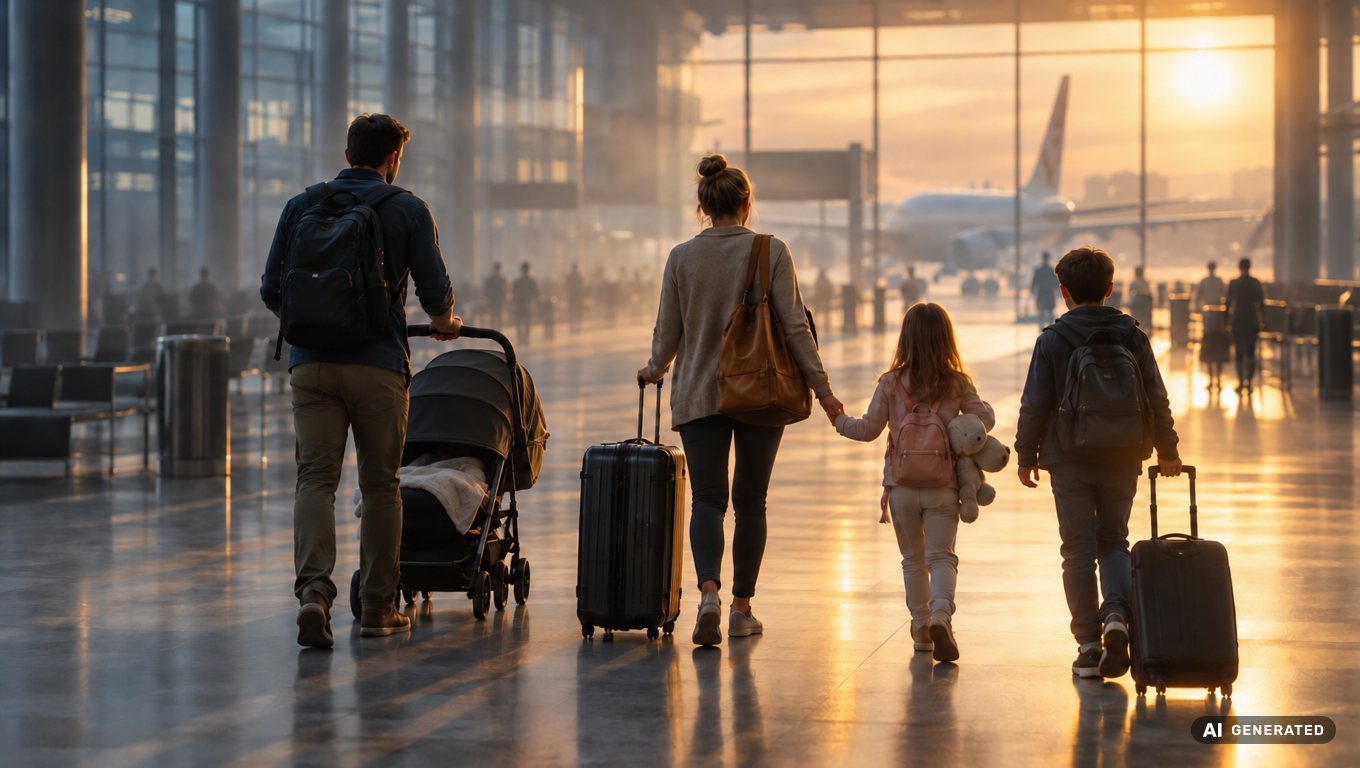
The best airport is the one you never notice. You leave your car, you walk, and the next thing you know you’re at your gate, as if you’d been teleported there.
I call it the invisible airport. I’m not an airport operations expert, but I’m an experienced technologist, and the first question I ask is always the same: what problem are we trying to solve? Here, the problem is every moment the airport makes you stop between your car and your gate.
A good restaurant server works the same way. Your glass of water is always full, even though you keep drinking from it. The napkin you dropped is replaced before you think to ask. The conversation with your guest is never broken. You don’t notice the server, and that’s how you know they’re good. You notice the server who interrupts.

Airport technology should allow an airport to be held to the same standard.
Count the stops
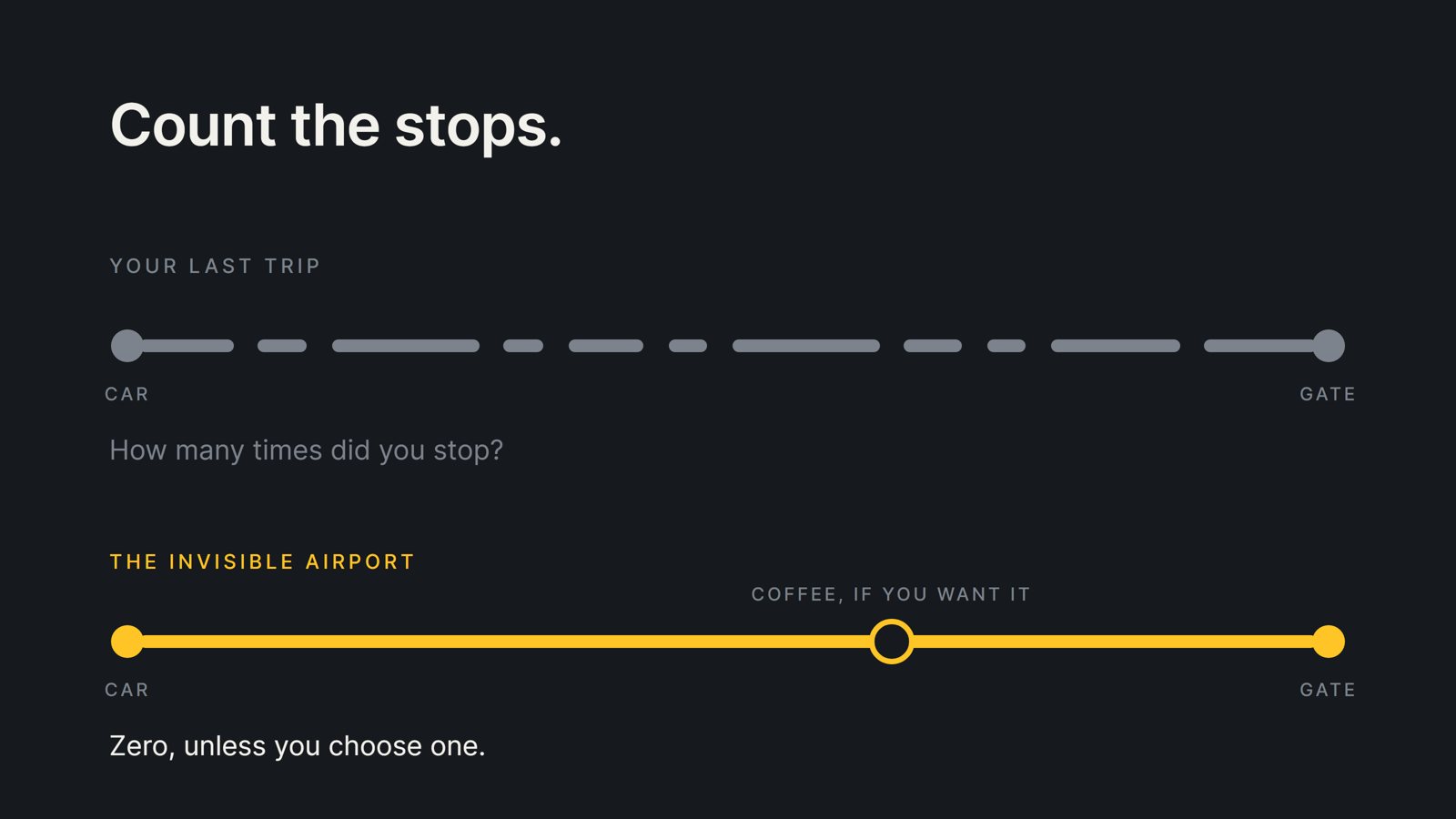
We can measure invisible. Count how many times you have to stop moving forward to do something between your car and your gate: pulling out a ticket, juggling bags, pulling up a boarding pass, showing ID. You know the feeling of fumbling for your ID at the front of the line while a crowd of people behind you watches. The ideal number is zero.
Stops are a heuristic, not an enterprise metric. What they point to is flow: steady speed through a constrained process. An airport works like an assembly line: the passenger keeps moving, and the only stops are the ones they choose, whether it is food, drink, or to wander through our art installations between concourses. Every unintentional stop makes the airport visible.
Almost zero
There was a time I flew through an airport with almost zero stops, and it was so amazing that I remember it to this day. MidAmerica St. Louis Airport, outside Belleville, Illinois, is small enough that I parked right outside the terminal, took a short walk in, and went through the gate with ease. I could still see my parked car from inside the airport! (You can see how close the parking lot sits to the terminal in this photo.) It’s the kind of airport you don’t need to show up two hours early for, and probably the closest thing to private flying you can get on an airline.
Small airports get invisibility by their nature. The world’s busiest airport has to build it. That’s far harder, and it doesn’t change the ambition. Difficulty only changes how close anyone gets to perfection.
Every stop is a technology problem
Vision is what drives my technology decisions, even though I don’t always have the final say; often business units, senior leaders, or regulations do. Airlines have their role to play in the journey. Mine is the experience across the airport, through a technology lens, and through that lens every stop is a problem with a technology answer.
The parking ticket is an identity problem. Picture a garage that recognizes you, lets you in without a ticket, and reminds you where you parked when you land tired a week later. The ID check is an identity problem too, and biometrics solve it at the checkpoint. Finding a coffee is a data problem: it should be as easy as finding your gate. Staying productive is an infrastructure problem: your devices stay connected, the movies for your flight download quickly, and the video call home or to the office is crystal clear.
Most of the stops come down to two capabilities: knowing who you are, and keeping you connected.
Identity is also where the risk lives. A system that knows this much about you has to be opt-in, and I will never support one that isn’t.
Done right, the world’s busiest airport feels like a small town, and getting from your car to your gate is stress free. I don’t know how close any airport can get, and it’s worth striving for anyway.
Find the real constraint
Flow is set by the constraint, and the constraint is rarely where it looks. In May 2025, we helped CBP install biometric scanners for arriving international passengers. The scanners weren’t the bottleneck. The readers were choking on the network. A small investment in Wi-Fi 7 fixed it, and wait times dropped by 40%. Travelers coming home from a long flight, after that long walk down the hallway to customs, got through much faster.
The obvious fix was more hardware. The real fix was the network.
Where technology stops
When ATL sneezes, the world catches a cold. Some challenges with flow no technology can remove. When line lengths were measured in hours in March because of TSA funding challenges that occurred the month prior, we turned off our TSA Wait Times displays and relied on human adaptability to manage the traffic. We removed technology to adapt to changing conditions, something only humans can do. I spent two of the peak travel days outside helping passengers find the TSA PreCheck line while the main line wrapped around the building several times.
That week, the people who make the airport invisible became visible. They are the unsung heroes of efficiency. They work behind the scenes to make the journey possible, and on a good day you never know they were there.
Count yours
The invisible airport is my goal, and the number that measures it is zero.
How many times did you have to stop on your last journey? Don’t forget to count each time the line moves a little bit and you have to stop again. It will add up!
The views in this article are my own.